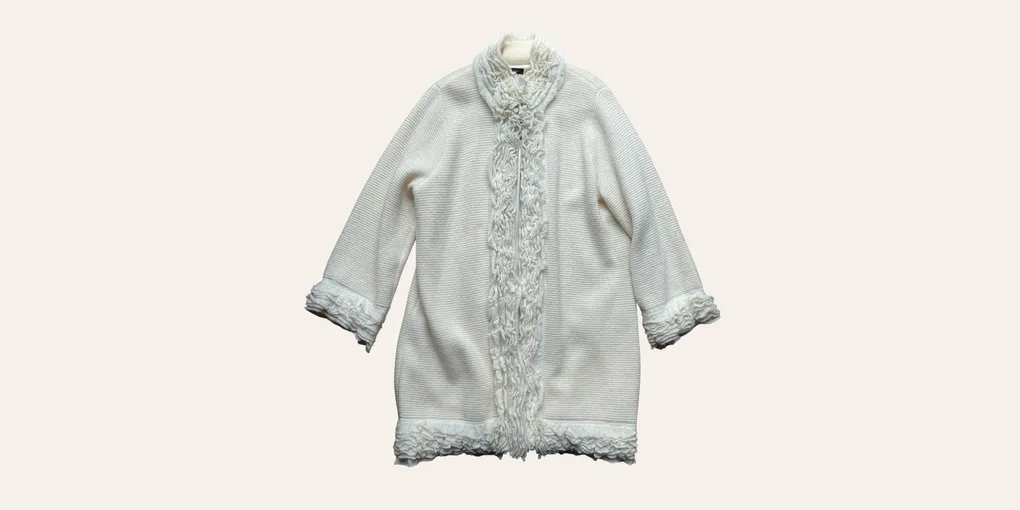
Finding Japanese Vintage: A Guide for Beginners
“Japanese vintage” covers a much wider range than most people expect — reworked American workwear, 1990s domestic streetwear, kimono fabric remade into modern shapes, and decades of meticulously kept secondhand denim. What ties it together isn’t a single look, but a culture of caring for clothes well enough that they’re still worth wearing decades later. This guide is written from the perspective of building a real, wearable wardrobe out of these pieces — not collecting them — so the focus throughout is on what actually holds up when you wear it.
Why Japanese Vintage Looks Different
Japan has imported and resold American vintage for decades — denim, military surplus, Ivy-style tailoring — and those pieces are often kept in noticeably better condition than the ones that stayed in the US, because of a strong domestic resale and repair culture. Clothes there tend to be stored carefully, mended rather than discarded, and passed along instead of thrown out. On top of that imported layer, there’s homegrown vintage: workwear, school uniforms, and indigo-dyed textiles that don’t really exist anywhere else. Both categories usually show up side by side in the same secondhand shops and resale apps, which is part of what makes the hunt interesting.
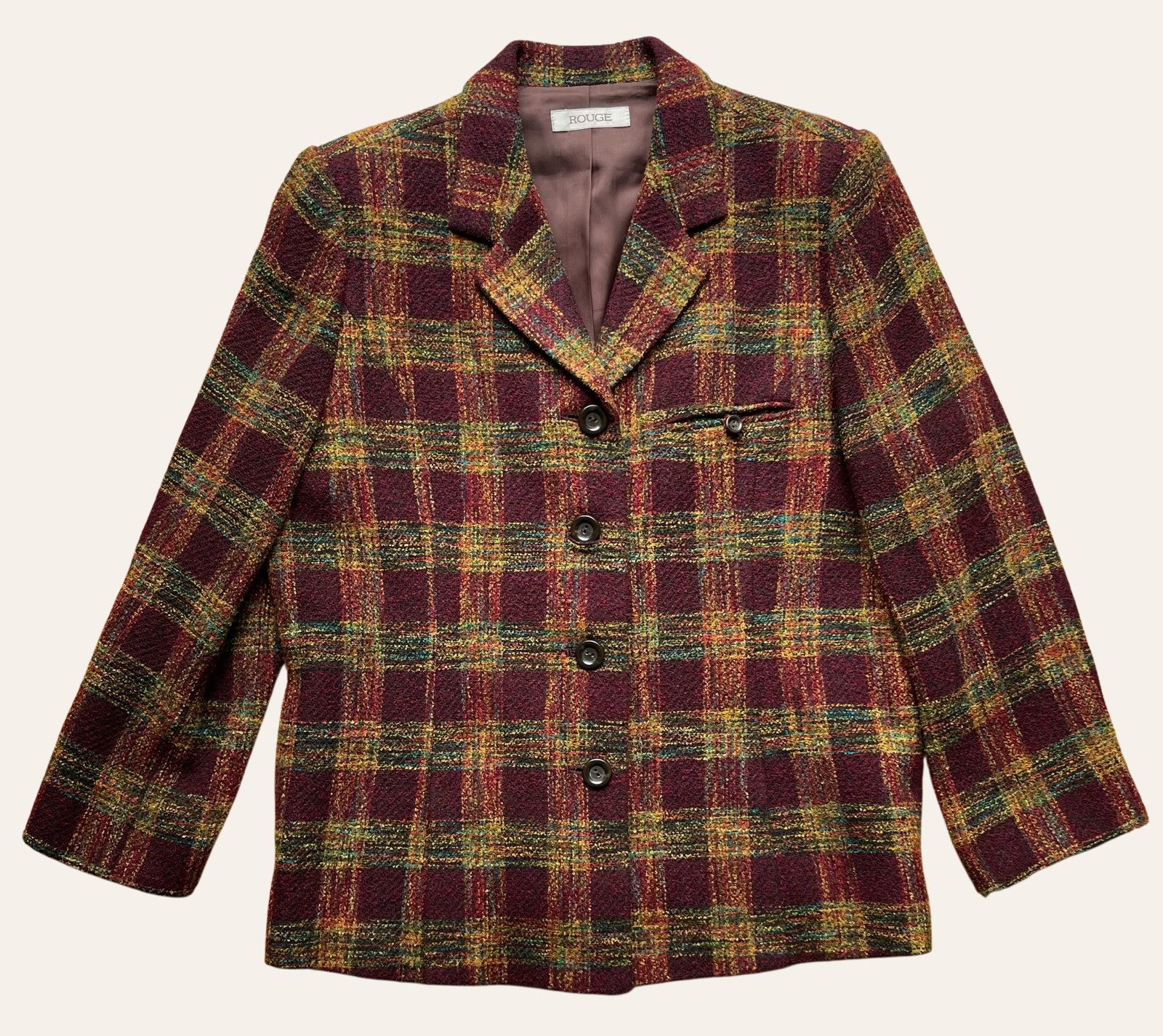 A secondhand checked jacket like this is a good first outerwear buy — the pattern reads as vintage, but the neutral tones still pair with plain modern basics.
The practical takeaway is that “Japanese vintage” is a sensibility more than a category. It rewards pieces that were built to last and kept well, whether they started life in Osaka or Oregon.
Where to Start Looking
If you’re not in Japan, you don’t need to be to start. A few reliable entry points:
- Resale apps and marketplaces that ship internationally are the easiest way in. Search by era, brand, or fabric — terms like “selvedge denim,” “boro,” “sashiko,” or “workwear jacket” surface the right pieces faster than browsing broad categories.
- Local secondhand and thrift shops carry imported Japanese pieces more often than you’d think, especially denim and outerwear. It’s worth learning to recognize the tells (below) so you can spot them in a crowded rack.
- Specialty vintage retailers that focus specifically on Japanese imports are worth following for restocks. Good pieces sell within hours, so turning on notifications beats checking occasionally.
A note on patience: the best finds rarely happen on the first visit. Treating it as a slow, ongoing search rather than a single shopping trip is what separates a wardrobe full of pieces you actually wear from a pile of impulse buys.
What to Look For
A few concrete signals separate a genuine, well-made piece from a mass-produced lookalike:
- Selvedge edges on denim — a small, clean woven border inside the hem, a sign of older, narrower-loom production.
- Visible mending or sashiko-style stitching — historically a repair technique, now valued as a feature rather than a flaw. Running-stitch reinforcement is a good sign a garment was made to be kept.
- Natural indigo fading — uneven, streaky fading reads as authentic; perfectly uniform fading usually signals a newer reproduction.
- Fabric weight — older Japanese workwear and denim tend to run heavier and denser than current fast-fashion equivalents. You can often feel the difference before you check a single label.
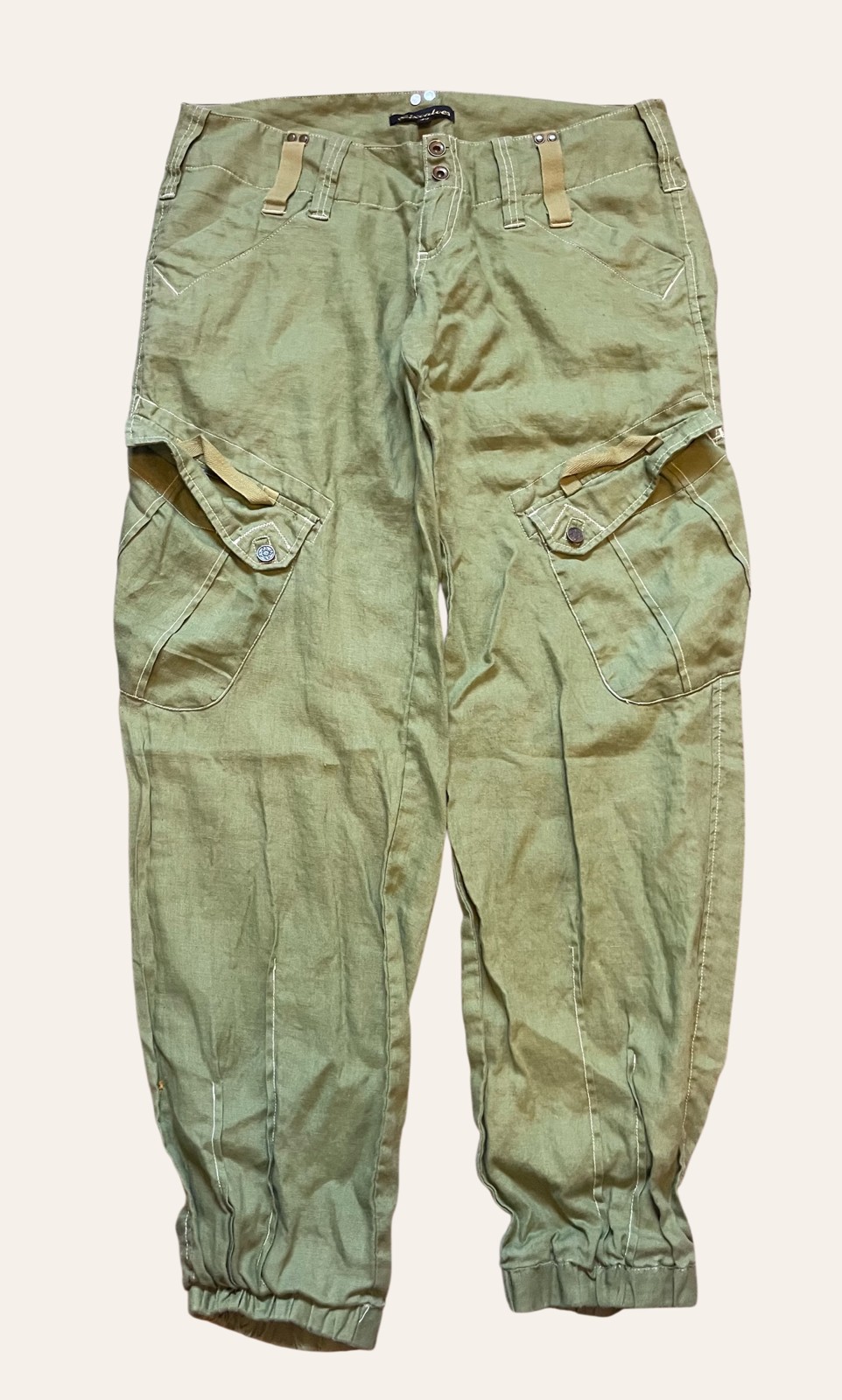 Utility and workwear bottoms are one of the most wearable entry points — durable fabric, a neutral color, and enough character to anchor an outfit on their own.
When you’re starting out, prioritize condition and fabric over label. A heavy, well-kept workwear piece with no famous name will serve you far better than a branded item that’s already thinning at the seams.
Styling It Into a Modern Wardrobe
The easiest way to wear Japanese vintage without it overwhelming an outfit is to pair one vintage piece with otherwise plain, current basics — exactly the approach in our UNIQLO linen shirt styling guide. A worn vintage jacket over a clean white shirt does more than a full vintage-on-vintage outfit, which can tip into looking like a costume rather than considered dressing.
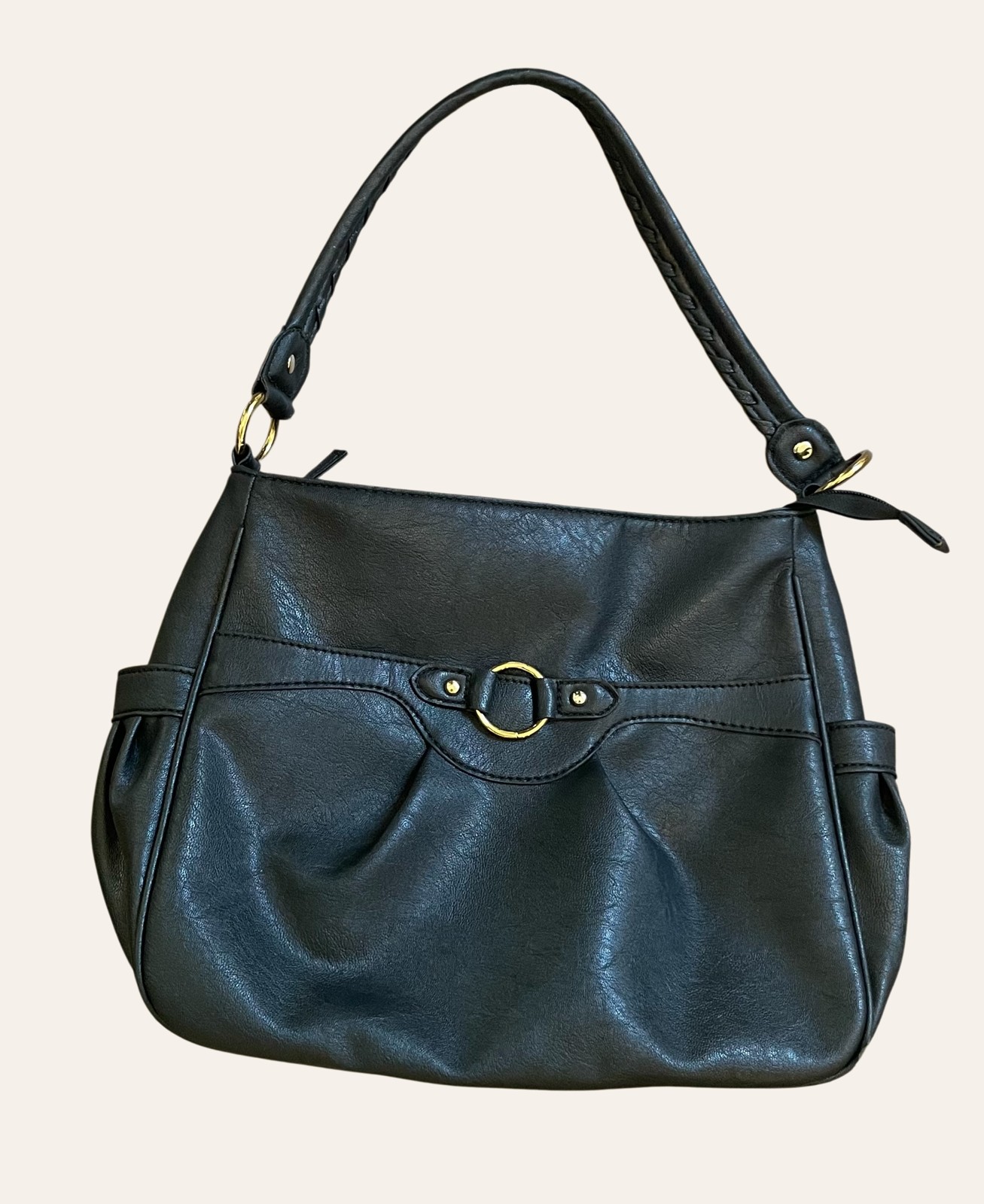 Accessories are the lowest-risk way to start. One aged leather bag adds texture and history to an otherwise minimal outfit without any styling effort.
A simple rule that works in practice: let the vintage piece be the only loud thing in the outfit. If your jacket has character, keep the rest quiet — neutral trousers, a plain tee, simple shoes. The contrast is what makes the vintage piece look intentional instead of accidental.
A Note on Price and Value
Genuine, well-kept Japanese vintage — especially denim and outerwear — is not always cheap, and that’s part of the point. These are pieces made to be repaired and resold for decades, not replaced every season. Budget for one good piece rather than several mediocre ones, and think about cost per wear rather than sticker price: a heavy vintage jacket you reach for weekly for years is a better value than three trend pieces you tire of by spring.
That mindset — fewer, better, kept longer — is also the quiet foundation of a sustainable wardrobe, since every secondhand piece is one less new garment produced.
Where to Go Next
If you’re ready to fold these pieces into a full, everyday wardrobe rather than treating them as one-off finds, our guide to mixing vintage with UNIQLO shows how to balance secondhand character against clean modern basics, and our Tokyo capsule wardrobe on a budget walks through building the whole thing step by step. Start with one good piece, learn what you actually reach for, and build slowly from there.
This post may contain affiliate links.